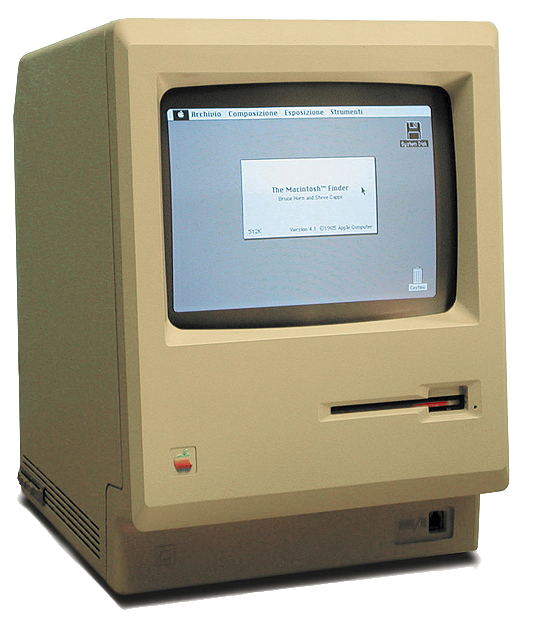
- Family
- Macintosh 128K/512K
- Architecture
- 68K
- CPU
- Motorola 68000
- Clock speed
- 8
- Introduced
- January 1984
- Discontinued
- October 1985
first Macintosh computer by Apple
Introduced in January 1984 (along with a revised Lisa ), this Macintosh didn’t have a model number – it was simply the Macintosh . There was no name on the front. Early 128Ks simply said Macintosh on the back, while later ones were marked Macintosh 128K to distinguish them from the later Macintosh 512K .
Equipped with 128 KB RAM, 64 KB ROM, a 3.5″ 400 KB floppy drive, a 1-bit 512 x 342 pixel b&w monitor, a mouse, and a couple applications (MacWrite and MacPaint), the Macintosh was destined to change the face of computing forever – it not only created the Mac look and feel, it also inspired forthcoming versions of Microsoft Windows and several other windowing interfaces.
What didn’t it have? A SCSI port, 5.25″ floppies, backward compatibility with the Apple II, III, or Lisa.
Specs (via Low End Mac)
- Announced: January 24th, 1984
- Discontinued: October 1st, 1985
- Rom: 64 KB Macintosh ROM
- Floppy Drive: 400 KB single-sided
- Addressing: 24-bit only
- Gestalt Id: Macmini1,1
- Apple Part Number: M0001
- Order Number: N/A Upgrade path: 512K , 512Ke , Plus
- Upgrade Path: 512K , 512Ke , Plus
- Pram Battery: 4.5V PX 21 (a.k.a. Eveready 523, ANSI 1306AP, IEC 5LR50)
- Weight: 16.5 lb.
- Power Supply: 60W
- Hxwxd: 13.6″ x 9.6″ x 10.9″
- Do Not Use High Density Disks: . If you want to copy a disk, open DiskDup+ and insert the “master” disk. It will be read and ejected. You will be asked for a copy disk. Insert the disk you are copying to. If necessary, DiskDup+ will format the disk. If the newly created disk is unreadable on the old Mac, try making a copy on another machine (this can be cause by a misaligned hard drive). DiskDup+ will work on old machines with 1 megabyte of RAM; it will require two passes to duplicate the disk, however.
- ($2499): 8 MHz, 1 Core, 1 Thread, 1 CPU, No Turbo,
- 16/32-Bit: 1.35W TDP @25°C, 3500 nm, 16-Bit data width, 24-Bit Address width, 64-Pin DIP